Integrated 35/70 MPa refueling systems with intelligent control, modular deployment and comprehensive safety protection.
Our Solution
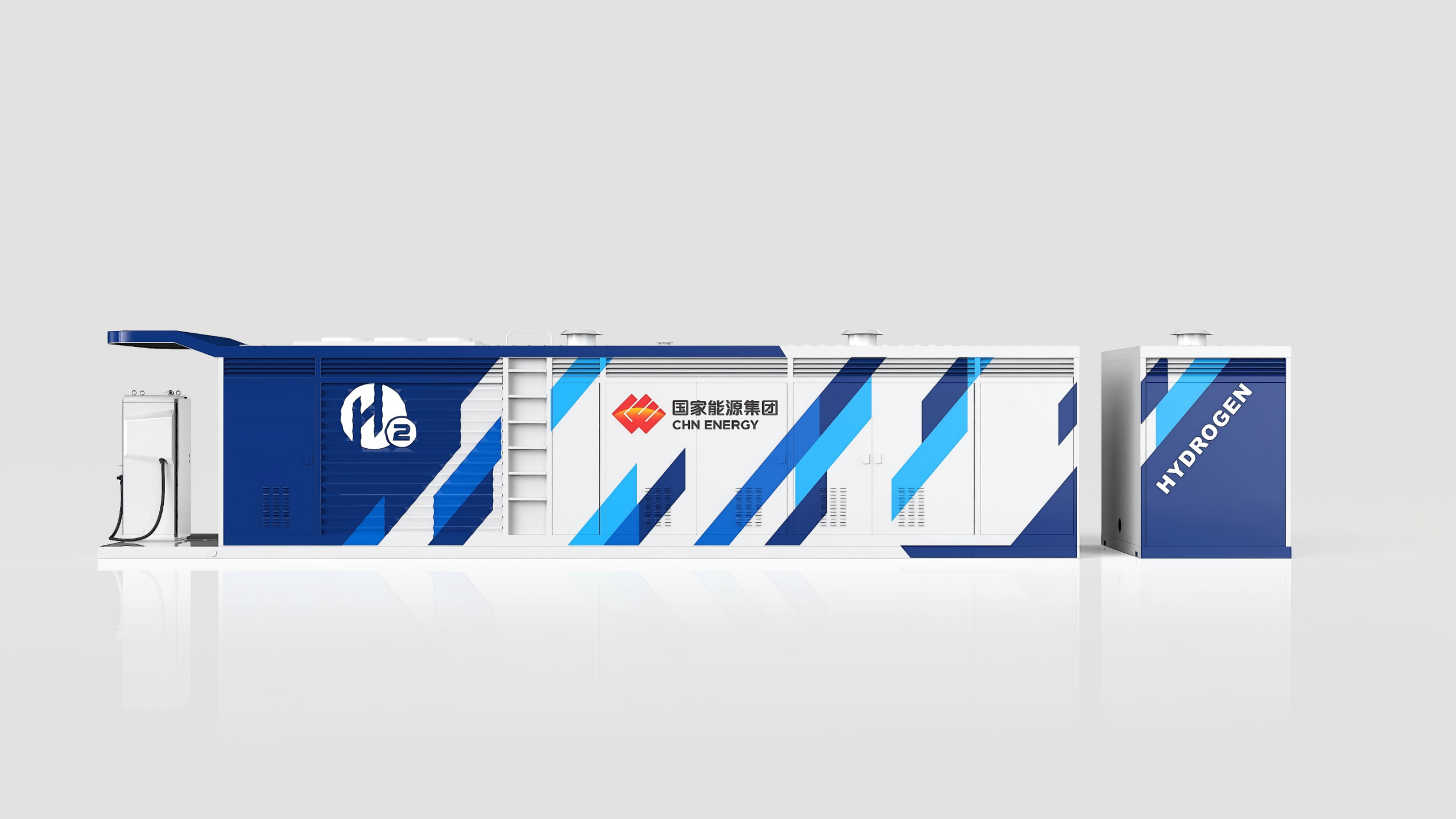
Containerized hydrogen refueling system
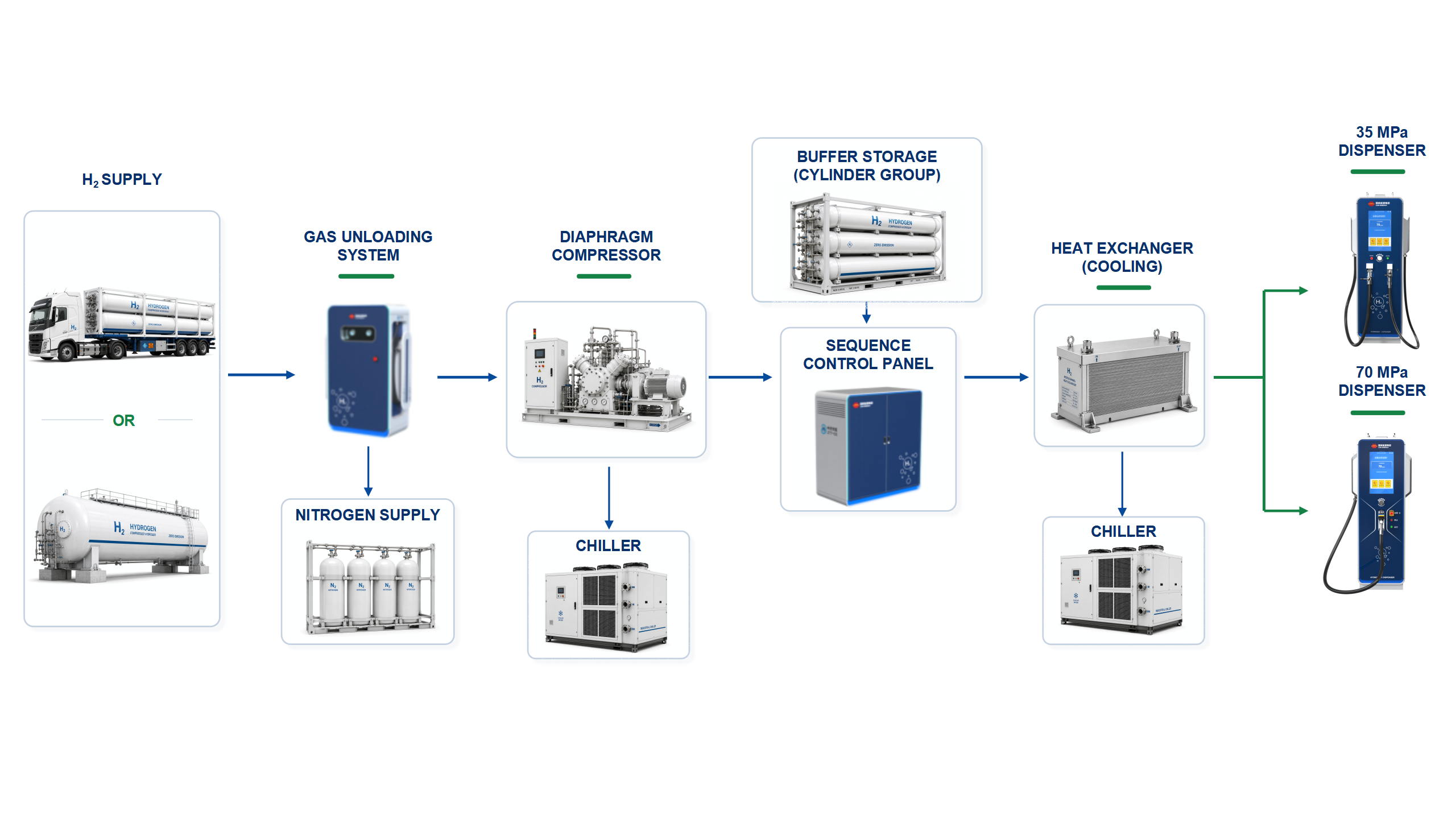
Skid-mounted hydrogen refueling station puts hydrogen dispenser, compressor, supporting chiller and other auxiliary equipments into a container for convenient transportation and rapid installation. The overall equipment is explosion-proof.
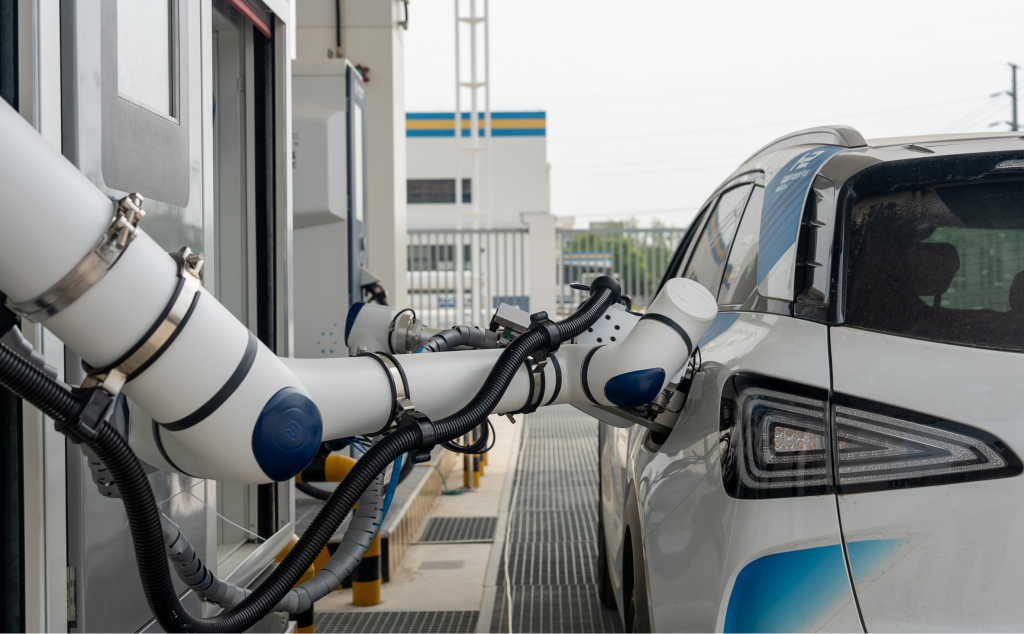
Automatic Hydrogen Refueling Robert
Equipped with advanced force-controlled soft floating technology and 3D vision combination camera
Operate continuously 24/7, automatically complete the entire hydrogen refueling process, reduce human error, and lower operational costs.
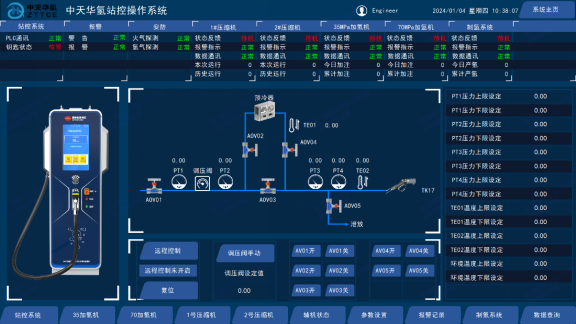
Station Control Technology
Refueling capacity can be increased by 10–20% without changing the hardware configuration by optimizing the integration of requirements, equipment, and station interfaces.
Features fault prediction and diagnostics, advanced safety interlocks, and fully automated operation.
The hydrogen dispenser control system holds proprietary IP, including PCT patents for refueling devices, station control methods, and system design (PCT/CN2019/078146, PCT/CN2019/078467).
Successful Cases
Fenning Hydrogen Refueling Station
HeBei, China | 1000kg/d | Automatic Hydrogen Refueling Robot | Completed Feb. 2025
Batuhta Heavy Haul Railway Hydrogen Refueling Station
Ningdong, China | 35 MPa | 7.2 kg/min | Automatic Hydrogen Refueling Robot | Completed June 2024
China's first 35&70MPa Hydrogen Refueling Station
Rugao,China | 1000kg/d | Completed Dec. 2019
Successful Cases
Fenning Hydrogen Refueling Station
HeBei, China | 1000kg/d | Automatic Hydrogen Refueling Robot | Completed Feb. 2025
Batuhta Heavy Haul Railway Hydrogen Refueling Station
Ningdong, China | 35 MPa | 7.2 kg/min | Automatic Hydrogen Refueling Robot | Completed June 2024
China's first 35&70MPa Hydrogen Refueling Station
Rugao,China | 1000kg/d | Completed Dec. 2019
About ZTTCE Hydrogen
ZTTCE is an integrated hydrogen equipment and EPC solutions provider. Backed by ZTT’s advanced manufacturing platform, NICE’s low-carbon hydrogen R&D and proven project delivery experience, we provide end-to-end capabilities from engineering and equipment manufacturing to commissioning and lifecycle service.
R&D and Manufacturing Capabilities
8,000 m² manufacturing base in Fengning and a 10,001 m² Hydrogen Technology R&D Center in Rudong, backed by end-to-end engineering, manufacturing, commissioning and lifecycle service.
Value Contained
Commercial Value: Driving Synergistic Development of the Hydrogen Industry Chain
The hydrogen industry chain (including hydrogen production, storage, transportation, fuel cells, and vehicle manufacturing) is driven to develop synergistically, promoting industrial upgrading and creating new momentum for economic growth. The high refueling efficiency of hydrogen refueling stations addresses the pain points of fuel cell vehicles (FCVs) such as "short range and slow refueling," accelerating their commercialization process and unlocking huge market potential in the future.
Environmental Value: Zero Emissions and Lifecycle Emission Reduction
Fuel cell vehicles (FCVs) emit only water, and the promotion of hydrogen refueling stations directly reduces carbon emissions in the transportation sector, effectively alleviating urban smog and air pollution. Locally produced green hydrogen is most beneficial to the climate, with lifecycle carbon dioxide emissions approximately 80% lower than those of diesel trucks (theoretical value), delivering significant environmental benefits and contributing to the achievement of the "carbon peaking and carbon neutrality goals."
Social Value: Promoting Energy Transition and Improving People's Livelihood
The construction of hydrogen refueling stations drives the transformation of the energy structure from fossil fuels to clean energy, reducing dependence on traditional gasoline and natural gas. The construction and operation of hydrogen stations require a large number of technical personnel and management talents, creating more job opportunities. It also allows the public to have close contact with hydrogen energy, popularizing its cleanliness and safety, and enhancing public awareness and acceptance.
-反白-rgyk712mnhczi1sjv2jrz96eetuv1qvfu5h21cx66q.png "中天科技横版版Logo(英文)-反白")
-反白-1024x290.png)